


Pediatric Hematology-Oncology Rapid Review Flash Cards
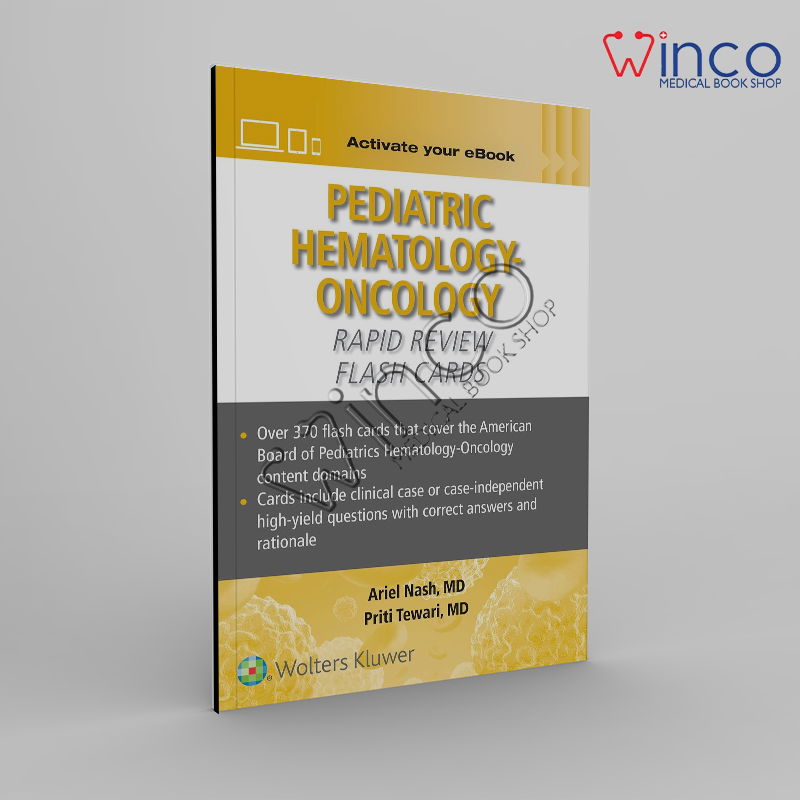
Pediatric Hematology-Oncology Rapid Review Flash Cards
Shipping: Delivery 2 To 3 Working Days
Returns: 7 Days Easy Return
ORDER ON WHATSAPP | واٹسّپ پر آرڈر کریں

Pediatric Hematology-Oncology Rapid Review Flash Cards
Pediatric Hematology-Oncology Rapid Review Flash Cards is a comprehensive and high-yield learning resource designed to help medical students, pediatric residents, hematology-oncology fellows, nurses, physician assistants, and healthcare professionals master the essential concepts of pediatric blood disorders and childhood cancers. Organized in an easy-to-use flash card format, this resource focuses on rapid review, active recall, and efficient exam preparation, making it an ideal companion for classroom learning, clinical rotations, board examinations, and daily clinical practice.
The flash cards cover a wide range of pediatric hematology topics, including normal hematopoiesis, anemia, iron deficiency anemia, megaloblastic anemia, hemolytic anemia, sickle cell disease, thalassemia, aplastic anemia, inherited bone marrow failure syndromes, neutropenia, platelet disorders, bleeding disorders, coagulation abnormalities, thrombophilia, hemophilia, von Willebrand disease, disseminated intravascular coagulation (DIC), and transfusion medicine. Each card presents concise facts, key diagnostic criteria, clinical features, laboratory findings, differential diagnoses, treatment options, and important clinical pearls that are frequently tested in medical examinations and encountered in pediatric practice.
The oncology section provides a focused review of the most common childhood malignancies, including acute lymphoblastic leukemia (ALL), acute myeloid leukemia (AML), Hodgkin lymphoma, non-Hodgkin lymphoma, neuroblastoma, Wilms tumor, retinoblastoma, osteosarcoma, Ewing sarcoma, rhabdomyosarcoma, hepatoblastoma, germ cell tumors, brain tumors, and other pediatric solid tumors. Each topic emphasizes epidemiology, genetics, risk factors, clinical presentation, staging, diagnostic workup, imaging findings, pathology, molecular markers, treatment protocols, chemotherapy principles, radiation therapy, surgical management, prognosis, and long-term follow-up care.
Designed for rapid learning, every flash card presents information in a question-and-answer format that strengthens memory retention through active recall. This educational approach enables learners to quickly identify knowledge gaps while reinforcing important concepts. High-yield facts, mnemonic devices, clinical tips, and board-style review points help students prepare efficiently for examinations without becoming overwhelmed by lengthy textbook chapters.
The book also emphasizes evidence-based clinical management according to current pediatric hematology-oncology practices. Readers gain a practical understanding of laboratory interpretation, peripheral blood smear findings, bone marrow examination, flow cytometry, cytogenetics, molecular diagnostics, coagulation studies, transfusion guidelines, supportive care strategies, infection prevention, febrile neutropenia management, oncologic emergencies, tumor lysis syndrome, superior vena cava syndrome, spinal cord compression, and survivorship care. These practical insights are valuable for both examination success and real-world patient management.
Clinical decision-making is further enhanced through case-based review questions that simulate common patient presentations encountered in hospitals and outpatient clinics. Learners can strengthen their diagnostic reasoning by reviewing symptoms, laboratory data, imaging findings, and treatment options in a structured, interactive format. These case scenarios promote critical thinking and reinforce the application of theoretical knowledge to clinical practice.
In addition to disease-specific content, the flash cards include concise summaries of pediatric pharmacology relevant to hematology and oncology. Common chemotherapy agents, targeted therapies, immunotherapies, blood products, anticoagulants, growth factors, supportive medications, and adverse effects are presented in a simplified format for rapid review. Drug toxicities, monitoring parameters, contraindications, and essential safety precautions are highlighted to improve medication knowledge and patient safety.
The resource also addresses genetic disorders and inherited cancer predisposition syndromes associated with pediatric hematology-oncology. Topics such as Fanconi anemia, Diamond-Blackfan anemia, Li-Fraumeni syndrome, familial retinoblastoma, Down syndrome-associated leukemia, neurofibromatosis, and other inherited conditions are explained clearly with emphasis on genetics, clinical implications, screening recommendations, and counseling considerations.
One of the greatest strengths of Pediatric Hematology-Oncology Rapid Review Flash Cards is its portability and flexibility. The flash card format allows learners to review key concepts during short study sessions, clinical rounds, commuting, or immediately before examinations. Rather than reading lengthy textbook chapters repeatedly, students can focus on high-yield facts that maximize retention and improve long-term memory through repeated review.
The content is organized logically into subject-based sections, allowing readers to quickly locate topics of interest while maintaining a systematic review schedule. Important laboratory values, staging systems, diagnostic algorithms, treatment pathways, prognostic factors, and clinical guidelines are summarized in a concise and visually accessible format. This structured organization improves learning efficiency while reducing cognitive overload.
The flash cards are particularly valuable for students preparing for medical school examinations, pediatric clerkships, residency in-training examinations, pediatric board certification, hematology-oncology fellowship assessments, licensing examinations, and other standardized medical tests. Their concise yet comprehensive presentation makes them equally useful for experienced clinicians seeking a rapid refresher before patient care or academic teaching sessions.
Healthcare educators may also utilize these flash cards as teaching tools during tutorials, bedside teaching, journal clubs, and group discussions. The question-and-answer format encourages interactive learning, collaborative discussion, and active participation among students and trainees. Faculty members can easily incorporate the cards into classroom sessions to reinforce important concepts and assess learner understanding.
In today’s rapidly evolving field of pediatric hematology and oncology, clinicians must remain current with advances in molecular diagnostics, targeted therapies, immunotherapy, precision medicine, and supportive care. This rapid review resource integrates modern clinical knowledge with practical examination preparation, providing learners with a balanced overview of both foundational science and contemporary clinical practice.
Whether reviewing normal hematopoiesis, interpreting laboratory investigations, diagnosing childhood leukemia, managing sickle cell disease, recognizing oncologic emergencies, or preparing for board examinations, Pediatric Hematology-Oncology Rapid Review Flash Cards serves as a reliable, efficient, and practical educational companion. Its emphasis on high-yield information, active recall, clinical relevance, and evidence-based medicine makes it an excellent resource for healthcare professionals committed to delivering high-quality pediatric care while achieving academic success.
Ideal for independent study, classroom learning, hospital rotations, and examination preparation, this resource transforms complex pediatric hematology and oncology topics into clear, concise, and memorable learning points. By combining essential clinical knowledge with an engaging flash card format, Pediatric Hematology-Oncology Rapid Review Flash Cards helps readers build confidence, improve diagnostic accuracy, strengthen clinical reasoning, and excel in both examinations and patient care.
WINCO ONLINE MEDICAL BOOKS SHOP
Related products
-6%
Murtagh General Practice Companion Handbook, 8th Edition
Original price was: ₨ 6,395.₨ 5,995Current price is: ₨ 5,995.
-14%

System Wise Medical Made Easy by First Aid Made Easy
Original price was: ₨ 1,395.₨ 1,195Current price is: ₨ 1,195.
Select options
This product has multiple variants. The options may be chosen on the product page
-29%
-11%
THE ONLY MRCP NOTES You Will Ever Need
Original price was: ₨ 1,895.₨ 1,695Current price is: ₨ 1,695.
-17%
1000 MTF MCQs for Primary & Final FRCA 1st Edition
Original price was: ₨ 1,260.₨ 1,050Current price is: ₨ 1,050.
-18%